

Most importers think they're buying directly from a factory. Many aren't.
It's one of the most common — and costly — mistakes in China sourcing. The supplier has a polished website, responds fast in English, and their Alibaba profile says "manufacturer." But behind the scenes, they're a trading company placing your order with a factory you've never vetted, never visited, and have no relationship with.
That gap is where problems start: quality inconsistencies, shrinking margins, communication breakdowns, IP exposure.
Knowing whether you're dealing with a factory or a trading company isn't a technicality — it directly affects your price per unit, your MOQs, your leverage in disputes, and the resilience of your supply chain.
A factory (工厂, gōngchǎng, or 制造商, zhìzàoshāng) is a registered entity that owns or operates a physical production facility. Their Chinese business license (营业执照) will list manufacturing (制造 or 生产) within the approved business scope.
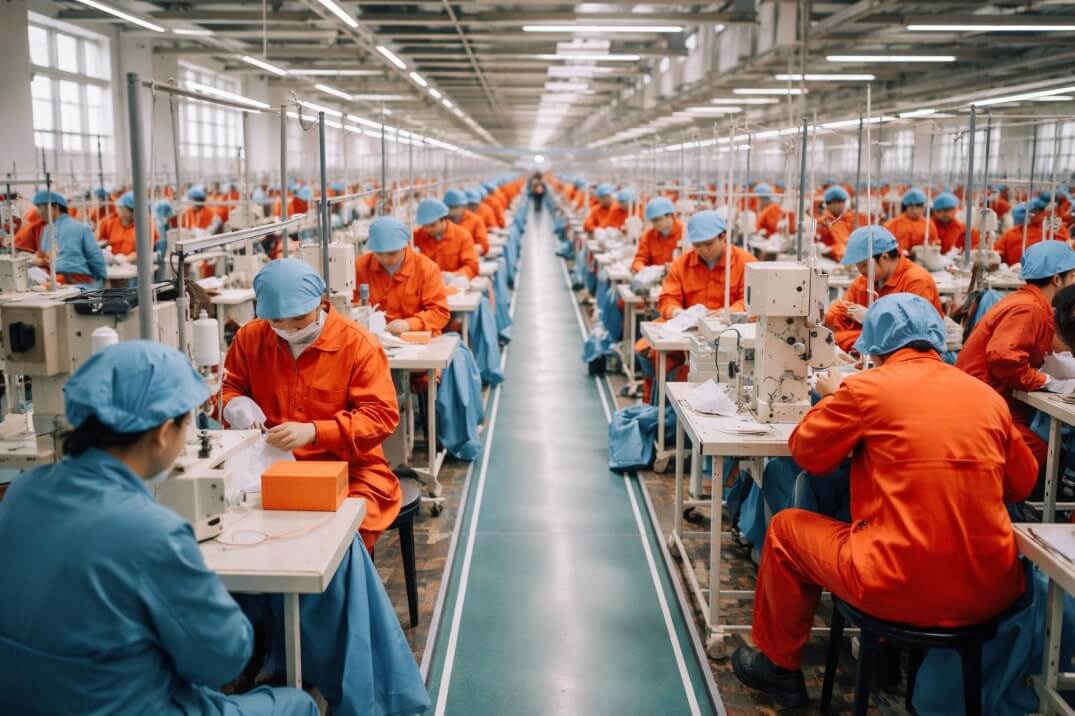
They own the equipment, employ the workers, manage raw material procurement, and ship directly. When you buy from a genuine factory, you're dealing with the entity that physically makes your product.
The advantages are real: factory-direct pricing with no middleman margin, production visibility, the ability to influence quality at the source, and clearer accountability when things go wrong.
The limitation: most Chinese factories are highly specialized. A factory producing stainless steel kitchenware won't make plastic components or electronics. If your sourcing spans multiple categories, one factory won't cover all of them.
A trading company (贸易公司, màoyì gōngsī) buys from factories and sells to you — with a margin added. Their business license scope references trading (贸易), import/export (进出口), or distribution. Not manufacturing.
Trading companies often have strong English, broad product catalogs, and established export infrastructure. They can consolidate goods from multiple factories into a single shipment, which simplifies logistics considerably.
The key difference: they don't control production. When you place an order, they place an order downstream. Their ability to influence quality, lead times, and specs depends entirely on their relationship with their factories.
This isn't automatically a problem. But you should always know which type of supplier you're dealing with before you commit.
Understanding the structural differences helps you make an informed sourcing decision rather than discovering the hard way that your supplier cannot meet your requirements.
Trading companies aren't the enemy of good sourcing. In the right scenario, they're the smart choice.
Multi-category sourcing. If you're sourcing furniture, electronics accessories, and apparel, a trading company with factory relationships across those verticals can consolidate your supply chain. Managing three separate factory relationships in three different provinces is a real operational burden.
Low initial volumes. Early-stage brands often don't meet the MOQs of direct factories, especially for custom goods. A trading company that aggregates orders from multiple buyers can make smaller quantities viable.
Language and capability gaps. Where you don't yet have the internal capability or local partnerships to manage factory communications directly, a trading company's English fluency and export experience has real value.
The honest question isn't "is this a trading company?" It's "does this trading company add more value than they cost?"
Some situations make a direct factory relationship non-negotiable.
Custom tooling and product development. Mould ownership clauses, tooling agreements, and IP assignments need to be with the entity that physically holds the assets. A trading company can't guarantee these protections.
IP-sensitive products. Working through an intermediary multiplies your exposure. Your specs are now known to the trading company, the factory they use, and potentially competing buyers if that factory produces similar goods.
High recurring volume. Once you've validated a product and are reordering at scale, the margin you're paying a trading company becomes significant — and avoidable.
Complex technical products. Tight specification tolerances, ongoing engineering collaboration, and post-production testing require direct factory engagement. A middleman creates too much noise in the chain.
Don't guess. Verify systematically — before any deposit is paid.
No single step alone confirms manufacturer status. The combined picture is what matters.
If you see more than two of these in a single supplier relationship, treat it as a serious risk signal.
Documents and video calls will only take you so far. Before any significant order, visit the factory in person — or commission a professional inspection company to conduct an on-site audit on your behalf.
A half-day factory audit will surface issues that no amount of email due diligence will catch: actual production capacity, workforce size, equipment condition, sub-contracting practices, and whether quality systems exist in reality or only on paper. The cost of an audit is a rounding error compared to the cost of a failed order.
The clean factory-vs-trading-company binary doesn't reflect how China's manufacturing landscape actually works. A significant portion of suppliers operate hybrid models.
Many established manufacturers have a separate trading arm — a sister company registered as a trading entity — that handles international sales while the parent factory handles production. You may be dealing with the trading entity legally while the factory behind it is owned by the same group. This can work in your favor if you get factory-level access, or against you if the trading entity acts as a genuine barrier.
OEM partnerships add another layer. A factory may manufacture its core product line in-house but outsource components to sub-suppliers. That's standard practice globally. The risk is when a factory outsources large portions of your specific product to unvetted sub-contractors without your knowledge.
Supply chains are layered. That's not a reason for paralysis — it's a reason to ask better questions, build transparency into your contracts, and audit periodically rather than once.
Before committing to any new supplier:
Start with the business license — check the scope for manufacturing (制造/生产). Cross-reference the registered address on satellite maps, confirm export history through trade data platforms, and do a live video walk-through. For added reassurance, commission an on-site third-party audit.
Generally yes, by 5–30% depending on the product. But if a trading company enables consolidated shipments, smaller MOQs, or multi-category sourcing that would require multiple factory relationships, the total cost equation may still favor working with them.
They introduce additional layers of risk — particularly around quality accountability and IP protection. That risk is manageable with proper due diligence and contract structure, but it should be consciously evaluated rather than ignored.
No. They can facilitate custom production by working with factories on your behalf, but your ability to protect tooling ownership, IP, and specifications is significantly weaker with a trading company as the intermediary. For any product with significant custom development, go direct.
Request a clear copy from the supplier. Key fields: company name (公司名称), registered address (注册地址), business scope (经营范围), registered capital (注册资本), and validity period (有效期). You can verify authenticity through China's National Enterprise Credit Information Publicity System using the company's unified social credit code.
Not always. Some trading companies with large order volumes negotiate better factory pricing than a small buyer could independently. What a factory will always offer — regardless of price — is production transparency and contractual accountability at the point of manufacture. That has value beyond unit cost.